Staying Legal with the 2026 Florida Gun Law Updates
What You Need to Know About Florida Gun Laws 2025 Right Now
Understanding florida gun laws 2025 is essential for any gun owner in the Sunshine State — whether you’re buying, selling, carrying, or storing a firearm.
Here’s a quick-reference summary of the most important points:
| Topic | Key Rule |
|---|---|
| Permitless Carry | Legal since July 1, 2023, for eligible individuals 21+ |
| Open Carry | Generally prohibited (court ruling may change this) |
| Minimum Purchase Age | 21 for all firearms |
| Waiting Period | 3 business days or until background check clears |
| Concealed Carry Permit | No longer required, but still available |
| Extreme Risk Orders | Law enforcement can petition; family members cannot |
| Gun Law Strength Score | 25.5 out of 100 (down from 28.5) |
| Preemption | State law overrides all local gun ordinances |
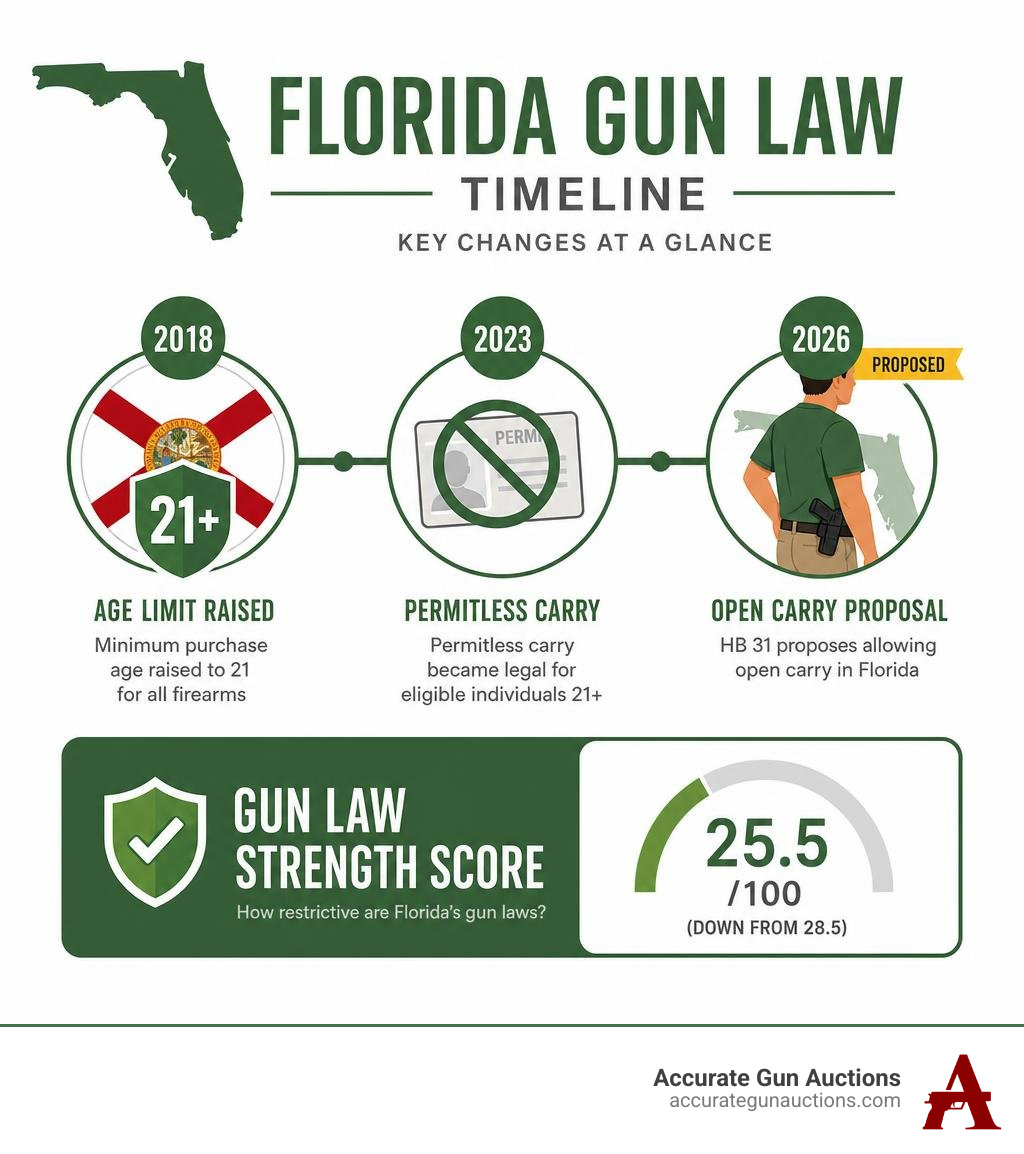
Florida’s gun laws have shifted significantly in recent years. The 2023 permitless carry change was the biggest shake-up in decades. And as of 2026, more changes may be on the way — including a proposed open carry expansion under HB 31.
If you own firearms in Florida, staying current isn’t optional. The stakes are real: violations can mean felony charges, lost carry rights, or worse.
This guide breaks down exactly where the law stands right now — in plain language — so you can stay compliant and confident.
Navigating Florida Gun Laws 2025 in 2026
Navigating the legal landscape of firearm ownership in Florida can feel like trying to dodge afternoon thunderstorms in July. Rules change, court decisions land, and legislative sessions introduce new bills that keep gun owners on their toes.
As we navigate through 2026, the foundational framework established by the florida gun laws 2025 updates remains the active standard across the state. Whether you are a long-time collector in Clearwater FL or a first-time buyer in Miami FL, knowing the boundaries of statutory compliance ensures you protect both your Second Amendment rights and your personal freedom.
Foundational Rules of Florida Gun Laws 2025
To understand where we are today, we have to look at the bedrock of Florida’s weapon statutes. Under Chapter 790 Section 25 of the Florida Statutes, the state explicitly outlines the lawful ownership, possession, and use of firearms. This statute is designed to be “liberally construed” in favor of your constitutional right to keep and bear arms.
The core of Florida’s current system relies on three main pillars:
- Background Checks at Point of Sale: All retail firearm purchases from licensed dealers (FFLs) require a background check through the Florida Department of Law Enforcement (FDLE), regardless of whether you have a concealed weapon license.
- Permitless Concealed Carry: Since July 1, 2023, eligible citizens have been allowed to carry a concealed weapon without a state-issued license, provided they meet the exact same legal criteria required to obtain one.
- Extreme Risk Laws (Red Flag Laws): Florida utilizes Risk Protection Orders (RPOs) to temporarily remove firearms from individuals who pose a danger to themselves or others. However, unlike some states, only law enforcement officers can petition a court for an RPO; family members cannot file these petitions directly.
How Florida Gun Laws 2025 Compare Nationally
When compared to the rest of the country, Florida’s approach to gun policy is highly unique. On one hand, the state has robust self-defense laws like “Stand Your Ground.” On the other hand, it maintains restrictions implemented after the 2018 Parkland shooting, such as raising the minimum purchase age to 21.
According to data compiled by gun safety organizations, Florida’s composite gun law strength score recently dropped to 25.5 out of 100 (down from 28.5 in previous years). This decline is primarily attributed to the elimination of the concealed carry permit requirement.
Despite these policy shifts, Florida’s gun death rate stands at 12.7 per 100,000 residents, which nearly matches the national average of 12.8 per 100,000.
| Metric | Florida | National Average |
|---|---|---|
| Gun Law Strength Score | 25.5 / 100 | Varies (Ranked 22nd) |
| Gun Death Rate (per 100k) | 12.7 | 12.8 |
| Permitless Carry? | Yes (Concealed only) | 29 States |
| Waiting Period? | Yes (3 days) | Varies by state |
Permitless Carry and Open Carry Rules in 2026
One of the most common points of confusion for gun owners in places like Tampa FL and Orlando FL is the difference between permitless carry and open carry. Let’s clear the air.
Florida is a permitless concealed carry state, but it is not a universal open carry state.
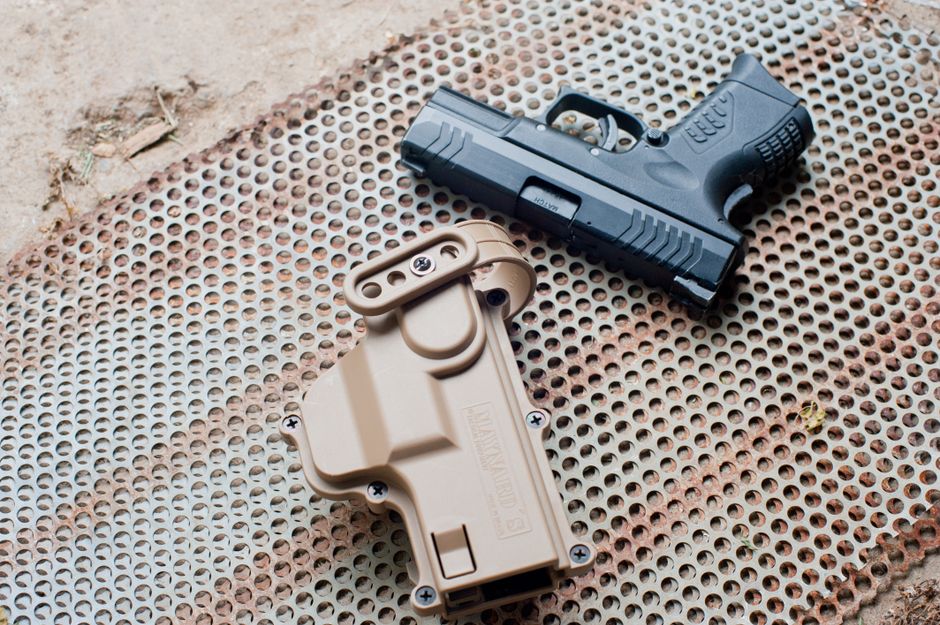
While you do not need a license to carry a concealed handgun in public (as long as you are legally eligible), you cannot walk down the street with your handgun exposed in a holster. Doing so remains a second-degree misdemeanor under Florida law, except in highly specific situations like traveling to or from a shooting range, hunting, or fishing.
However, the legal landscape is shifting. Recent court battles and legislative proposals, such as the hb31-00 bill filed for the legislative session, have aimed to expand open carry rights across the state. While open carry advocates cite historical rulings from the First District Court of Appeals to challenge the ban, local authorities like the Jacksonville Sheriff’s Office open carry guidance remind residents that open carry remains illegal in most public spaces for now.
Eligibility Requirements for Concealed Carry
Just because Florida does not require a permit to carry a concealed weapon does not mean “anything goes.” To legally carry a concealed firearm without a license in 2026, you must meet the exact same eligibility criteria that were previously required to get a physical Concealed Weapon License (CWL).
To qualify, you must:
- Be at least 21 years of age (or be an active-duty military member or honorably discharged veteran).
- Be a U.S. citizen or legal permanent resident.
- Not have a felony conviction on your record (felons face an indefinite prohibition unless their civil rights are restored).
- Not be disqualified due to a history of substance abuse, chronic alcohol use, or commitment to a mental health facility.
- Not have a violent misdemeanor conviction within the past three years.
If you do not meet these criteria, carrying a concealed firearm without a license is a third-degree felony. If you’re unsure where you stand, we always recommend reviewing our Sell My Guns Legal Requirements page to understand state and federal eligibility.
Prohibited Locations for Carrying Firearms
Even if you are fully eligible to carry, you cannot take your firearm everywhere. Florida law maintains a strict list of “gun-free zones” where carrying a concealed weapon is completely prohibited, regardless of whether you have a permit.
These off-limits locations include:
- Schools & Colleges: K-12 school property, administrative buildings, and college campuses (though stun guns or non-lethal weapons may have different rules).
- Government Buildings: Courthouses, polling places, legislative meetings, and police stations.
- Bars and Portions of Restaurants: You may carry in the dining area of a restaurant that serves alcohol, but you are strictly prohibited from carrying while sitting at the bar itself.
- Airports: Inside the passenger terminal past the security checkpoints (carrying in the public, unsecured lobby is generally legal but highly discouraged).
- Private Property: Business owners and private homeowners have the right to prohibit firearms on their property. If a business has a “No Weapons” sign or asks you to leave because you are armed, you must comply or face armed trespass charges.
Purchasing Firearms and Consumer Safety Regulations
Buying a gun in Florida is a relatively straightforward process, but the state does enforce several consumer safety measures designed to prevent impulsive acts of violence and keep firearms out of the wrong hands.
Waiting Periods and Background Checks
When you purchase a firearm from a licensed dealer in Florida, you must undergo an instant background check through the FDLE, which carries an $8.00 fee.
Additionally, Florida enforces a mandatory three-business-day waiting period for all firearm purchases (or until the background check is complete, whichever is later). This waiting period excludes weekends and legal holidays.
By requiring the transfer to wait until the background check is fully cleared, Florida effectively closes the “Charleston Loophole”—a federal loophole that allows a sale to proceed after three days even if the background check is still pending.
Are there exemptions to the waiting period? Yes! You are exempt from the three-day wait if:
- You hold a valid Florida Concealed Weapon License (CWL).
- You are trading in an existing firearm.
- You are an active law enforcement officer.
For private gun sales between two unlicensed individuals, background checks are not required at the state level, though certain counties may enforce local waiting periods for private transactions. If you are planning a private sale, make sure you understand the rules by reading our What Paperwork is Required to Sell a Gun in Florida 2025 Guide and our complete breakdown of Florida Private Gun Sales.
Restrictions on Assault Weapons and Accessories
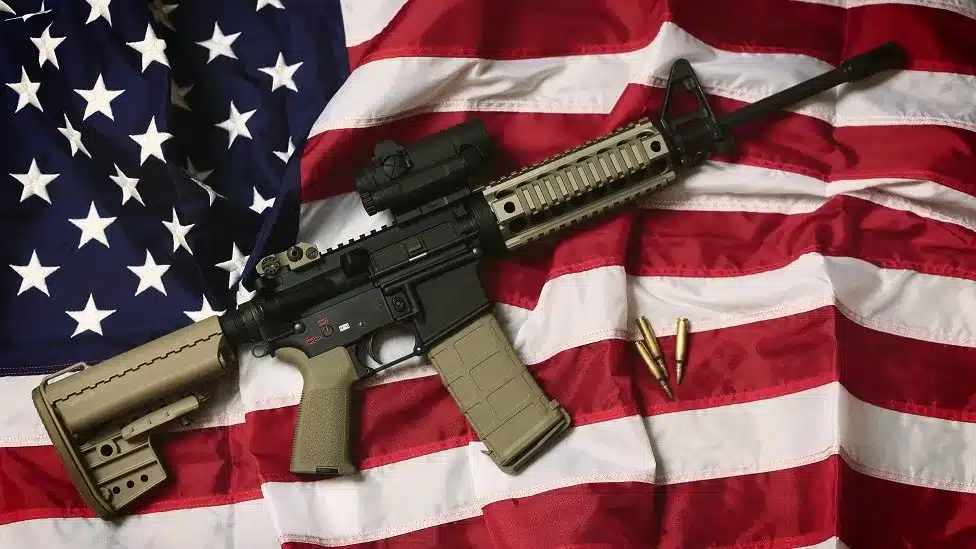
Florida does not have a state-level ban on semi-automatic “assault weapons” or high-capacity magazines. You can legally purchase and own AR-15s, AK-47s, and magazines that hold more than 10 rounds.
However, the state does restrict certain accessories and ammunition types:
- Bump Stocks: Florida law strictly prohibits the possession, sale, or manufacture of bump stocks and other conversion devices designed to increase the rate of fire of a semi-automatic weapon to mimic automatic fire.
- Machine Guns: Fully automatic weapons are prohibited unless they are registered in compliance with federal National Firearms Act (NFA) regulations.
- Armor-Piercing Ammunition: Handgun ammunition designed to penetrate body armor, as well as exploding bullets, are illegal to sell or possess.
- Ghost Guns: Homemade firearms without serial numbers are subject to strict federal regulations, though Florida does not have a standalone state ban.
State Preemption and Local Control Laws
If you live in a patchwork of cities like St. Petersburg FL, Tampa FL, or Fort Lauderdale FL, you might worry about crossing city lines and accidentally violating a local gun ordinance. Fortunately, Florida gun owners are protected by one of the strongest preemption laws in the nation.
The Joe Carlucci Uniform Firearms Act
Under Chapter 790 Section 33 of the Florida Statutes, also known as the Joe Carlucci Uniform Firearms Act, the Florida Legislature has occupied the entire field of firearms and ammunition regulation.
This means local cities, counties, and municipalities are completely barred from passing their own gun control ordinances. Any local gun law that is more restrictive than state law is null and void.
To make sure local officials respect this law, the state imposes severe penalties for violations:
- Local officials who knowingly and willfully violate preemption can face civil fines of up to $5,000 paid out of their own pockets (taxpayer funds cannot be used to pay these fines).
- Public officials can be removed from office by the Governor.
- Affected parties can sue local governments for damages up to $100,000 plus attorney fees.
Law Enforcement Accountability and Red Flag Laws
While local governments cannot regulate guns, Florida’s state-level Risk Protection Orders (RPOs) allow law enforcement officers to step in during a crisis. If an individual poses a clear threat to themselves or others, police can petition a judge to temporarily suspend their right to possess or purchase firearms.
While these “red flag” laws are designed to prevent gun violence and suicides, they have strict guardrails:
- Only law enforcement can petition: Family members, neighbors, or ex-partners cannot file an RPO directly. They must report their concerns to the police, who will then investigate and decide whether to petition the court.
- Due Process: A temporary RPO can be issued quickly, but a full hearing must be held within 14 days, where the individual has the right to legal representation to challenge the order.
- HB 31 Proposals: Some legislative efforts in 2026 have proposed repealing RPOs entirely, but as of right now, they remain an active tool for Florida law enforcement.
Frequently Asked Questions About Florida Firearms
Navigating the rules can be tricky, so here are direct answers to the most common questions we hear from gun owners across Florida USA.
Can I sell a gun privately in Florida in 2026?
Yes, private gun sales remain legal in Florida. You do not need to conduct the transfer through a licensed dealer (FFL) or run a background check, provided you are selling to another Florida resident who is legally allowed to own a gun.
However, you must not sell to anyone you know or have reasonable cause to believe is prohibited from owning a firearm. To stay completely safe, we highly recommend reading our guides on Can I Sell a Gun Privately in Florida Yes 2026 Guide and Legally Sell a Firearm in Florida Private Sale Rules 2026.
Who can petition for an Extreme Risk Protection Order in Florida?
In Florida, only law enforcement officers or law enforcement agencies can petition a court for a Risk Protection Order (RPO). Family members, domestic partners, and school officials cannot file a petition directly; they must report the situation to local police, who will evaluate the case.
What is the minimum age to purchase a firearm in Florida?
The minimum age to purchase any firearm in Florida—including handguns, rifles, and shotguns—is 21 years old. This limit was raised from 18 following legislative reforms in 2018. The only exceptions are for active-duty military members and honorably discharged veterans who are at least 18.
Conclusion
Staying compliant with florida gun laws 2025 is the responsibility of every gun owner. Whether you live in Tallahassee FL, The Villages FL, Naples FL, or any of our other service areas, keeping up with changing rules protects your rights and your community.
If you have firearms you no longer need, selling them privately can be a legal minefield. That is where we come in. At Accurate Gun Auctions, we help gun owners across Florida sell their firearms to a nationwide buyer base through our compliant online auction platform.
We handle all the legal compliance, shipping, marketing, and FFL transfers for you, ensuring you get the maximum sale price with zero legal hassle.
Ready to sell your firearms safely and legally? Visit our Florida Gun Laws 2025 hub to learn more, or contact us today to get started!