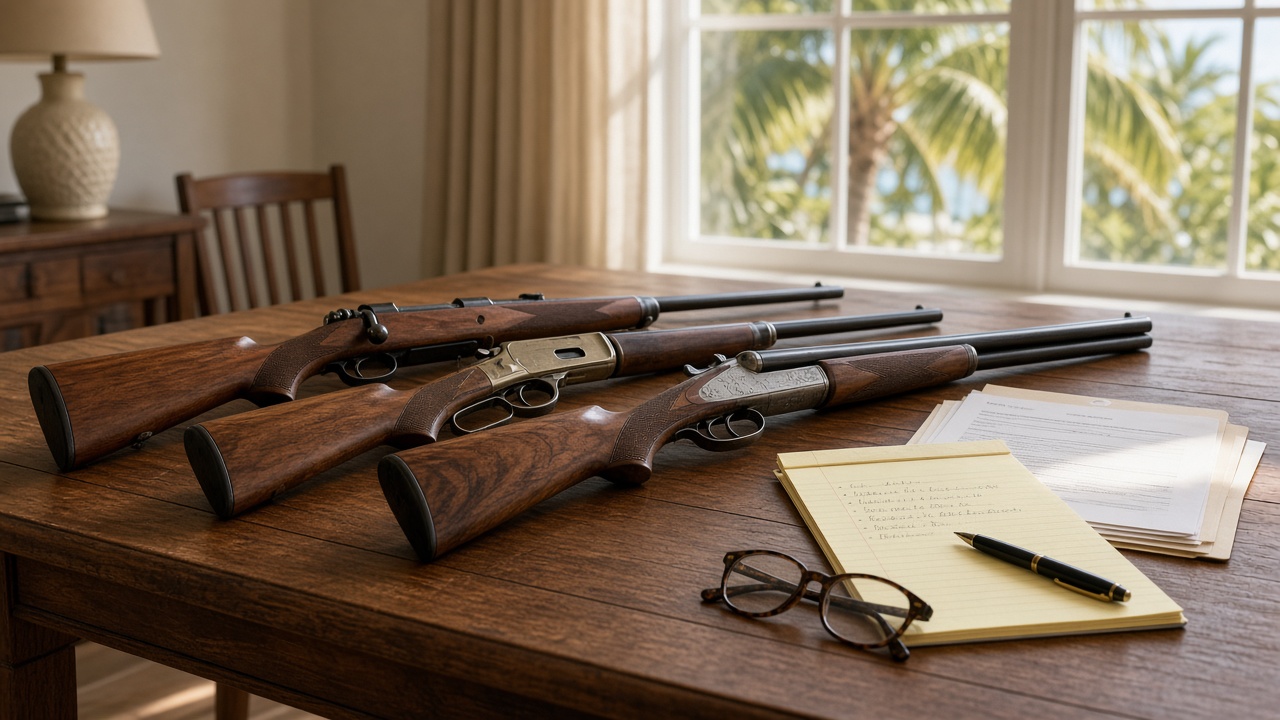
If you are an estate executor trying to sell guns in Florida, you are not shopping for a hobby. You are closing out someone else’s property under a duty to the estate. That usually means a safe, a closet, or a whole room of firearms you did not buy, may not shoot, and still have to handle carefully.
Families call Accurate Gun Auctions when the personal representative needs a calm path: inventory the collection, avoid risky private meetups, and consign through a licensed FFL auction process. We are based in Clearwater and work with executors and heirs across Florida.
If you want a person first, call 727-210-3504. If you already have a partial inventory, you can get a free estimate for your gun.
Why executors feel stuck with estate firearms
An executor’s job is broader than “get a number.” You may need to:
- Confirm you actually have authority to sell on behalf of the estate
- Identify what is in the collection without guessing
- Keep firearms secured while the estate is open
- Choose a sale method that is documentable and low-drama for co-heirs
- Avoid transfer mistakes that create personal stress later
Private classified ads put the executor in the middle of screening strangers. A single shop offer can be simple, but it is one buyer’s number. An FFL auction consigns through a licensed dealer, presents the guns to interested buyers through the auction process, and routes transfers through licensed channels.
For a general seller walkthrough, see how to sell. For Florida-focused seller requirements in plain language, use legal requirements.
Start with authority and a clean inventory
Before you consign anything, make sure the paperwork matches the person making decisions. Personal representative letters, letters testamentary, or other estate documents that show who may sell should be ready. If co-executors must agree, get that agreement in writing before guns leave the house.
Then inventory. Note make, model, caliber or gauge, serial number, and condition. Photograph each firearm. Keep magazines, optics, and boxes with the gun they belong to. Separate pieces the family wants to keep from pieces authorized for sale.
A rough value check can help the estate set expectations. You can Get Instant Estimate as a starting point.
This valuation is an automated estimate for informational purposes only and does not constitute a formal appraisal or offer to buy. Actual market value varies based on specific condition, provenance, local laws, and current market demand. We recommend a professional in-person appraisal for the most accurate valuation.
Online tools cannot see bore condition, refinishes, or matching numbers. Treat the estimate as orientation, then talk with an FFL that handles estate lots regularly.
Private sale vs shop offer vs FFL auction for an estate
Private sale. The estate may reach a strong price discussion, but the executor owns the screening, the meetup logistics, and the documentation burden. One awkward transfer can create more estate friction than the cash was worth.
Local shop or pawn offer. Speed is the appeal. The tradeoff is usually a single offer shaped by that shop’s inventory needs. That can fit when the estate needs a fast close on ordinary firearms and values certainty over market discovery.
FFL auction consignment. You consign through a licensed dealer. Photos, descriptions, and auction presentation are handled professionally. Interested buyers compete during the auction window. Winning-buyer transfers are processed through FFL channels. The executor is not negotiating in a parking lot.
For many Florida estates with mixed hunting guns, handguns, and older pieces, auction consignment is the cleaner fit: one licensed intake, one process, and a paper trail the personal representative can explain to heirs.
More seller questions live on our FAQ.
How Accurate Gun Auctions works with executors
Our seller-facing path is designed to stay simple:
- Intake conversation. Start with the free estimate form or call 727-210-3504. Tell us what you know about the collection and the estate status.
- Review. We look at the firearms, condition notes, and the authority documents you can share. If something needs extra review before consignment, we say so early.
- Listing and auction. We prepare presentation and place authorized firearms in auction. Competitive bidding is the point of the format.
- Transfer and settlement. Winning buyers complete required transfer steps through licensed channels. Settlement follows the consignment terms you agreed to up front.
We do not invent fee schedules, commission rates, or payout-day promises in a blog post. Ask for current consignment terms when you are ready. That is cleaner than locking numbers into an article that can go stale.
If the estate is in Tampa Bay, our local page on sell my guns in Tampa may also help family members understand the regional process. Heirs comparing city guides can also review Orlando and other Florida seller pages on the site.
General legal notes for Florida estate firearms (not legal advice)
Estate firearms sit between probate administration and firearm transfer rules. Executors often ask whether they can hand a gun to an heir the same week, ship a safe full of guns like ordinary freight, or list everything online overnight. Those are the moments to slow down.
Practical framing we give Florida executors:
- Treat every firearm as regulated property, not ordinary household goods.
- Confirm selling authority before you move or consign the collection.
- Do not improvise interstate shipping or out-of-state handoffs.
- If an item may be an NFA firearm, pause and get licensed guidance before you transfer it.
- Document what left the estate, when, and through which licensed path.
ATF has long published guidance on when auction activity requires a dealer license. In ATF Ruling 1996-2, ATF addresses estate-sale auctioneers and FFL requirements for consignment-style firearm auctions; see ATF Ruling 1996-2. For private-seller best practices on same-state and out-of-state transfers, see ATF’s best practices for transfers by private sellers. Florida dealer purchase process context for FFL transfers is summarized by FDLE’s Firearm Purchase Program FAQs.
This article is general information, not legal advice. Firearm statutes change. Confirm current Florida and federal rules or speak with a licensed attorney and AGA’s FFL team before you transfer a firearm.
Estate facts vary. Heir residency varies. The right path for one Florida estate is not automatically right for another.
Scams and impersonation risk while the estate is open
Executors are high-value targets for rushed “I will take everything today” messages. Watch for pressure to move the conversation onto Telegram or other messaging apps, surprise “shipping upgrade” fees, and lookalike business names.