Selling Your Gun in the Sunshine State: Legal Rules and Safety Tips
What You Need to Know to Sell a Gun in Florida Legally
If you want to sell gun florida legally, here is the short answer:
Yes, private firearm sales between Florida residents are legal — as long as both parties follow state and federal rules. No background check or waiting period is required for private sellers. But you must make sure the buyer is legally allowed to own a gun, and both parties must be Florida residents.
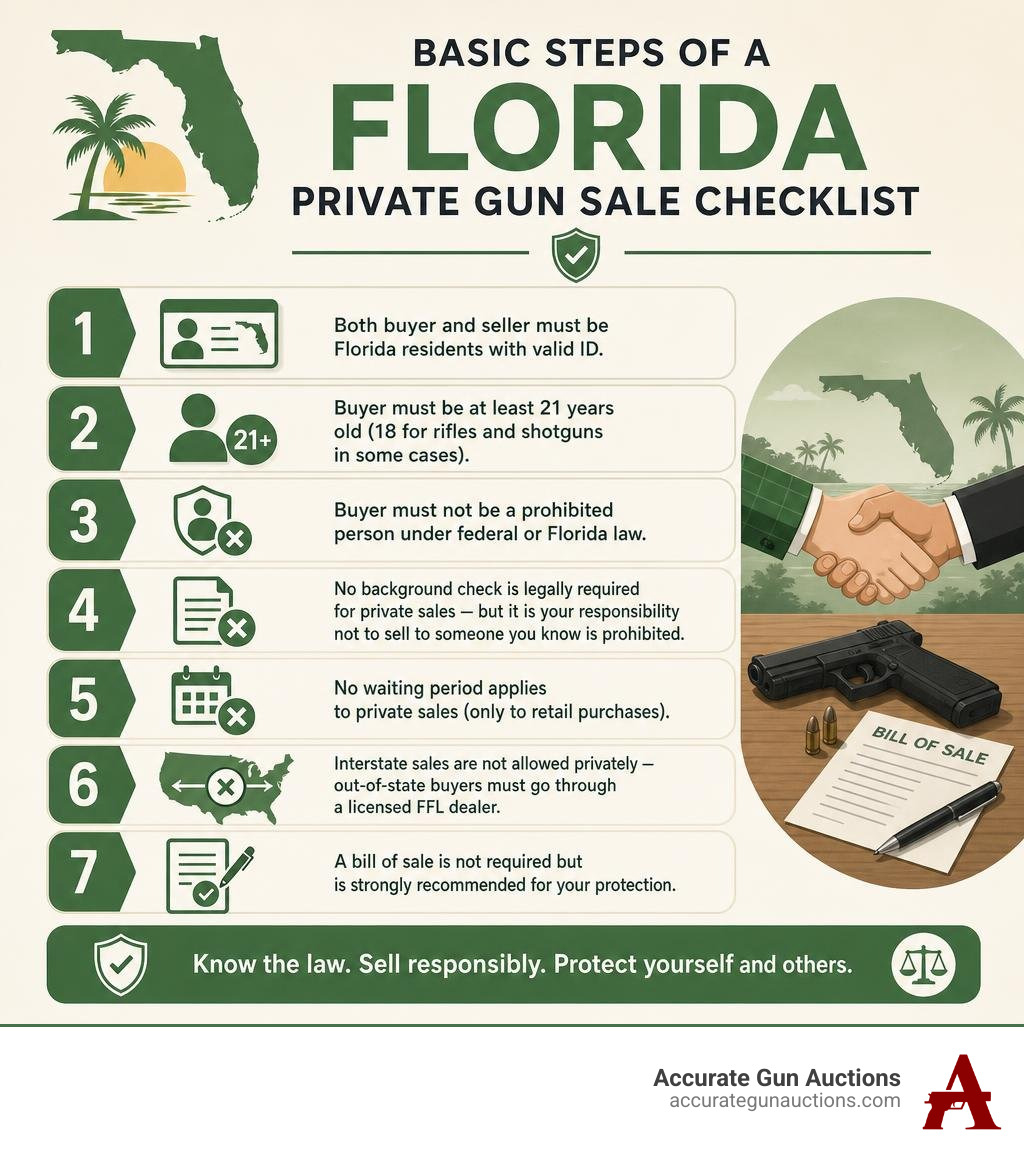
Quick checklist to sell a gun privately in Florida:
- Both buyer and seller must be Florida residents with valid government-issued ID
- Buyer must be at least 21 years old (18 for rifles and shotguns in some cases)
- Buyer must not be a prohibited person under federal or Florida law
- No background check is legally required for private sales — but it is your responsibility not to sell to someone you know is prohibited
- No waiting period applies to private sales (only to retail purchases)
- Interstate sales are not allowed privately — out-of-state buyers must go through a licensed FFL dealer
- A bill of sale is not required but is strongly recommended for your protection
Florida gun laws are not complicated for most law-abiding sellers — but one wrong move can turn a simple transaction into a felony charge. Whether you are selling a handgun to a neighbor or clearing out an inherited collection, knowing the rules before you act protects you legally and financially.
How to Sell Gun Florida Legally: State and Federal Requirements
When you decide to sell a firearm from your personal collection, you are stepping into a legal framework governed by both federal regulations and Florida state laws. Navigating these rules doesn’t require a law degree, but it does require your full attention.
In Florida, we enjoy robust Second Amendment protections, but these rights come with the responsibility to transfer firearms safely and lawfully. Under state law, private individuals who are not “engaged in the business” of selling firearms (which would require a Federal Firearms License, or FFL) may sell their personal property to other qualified individuals. However, federal law still dictates the boundaries of these transactions, particularly when it comes to who can buy your gun and where they live. Learn more about Florida gun laws to get a solid grasp of how the state regulates ownership and transfers.
Age and Residency Rules to Sell Gun Florida Legally
Before you even show your firearm to a prospective buyer, you must verify two critical things: their age and their state of residency.
- Residency Requirements: Under federal law, private firearm transfers are strictly limited to residents of the same state. This means you, as a Florida resident, can only sell your gun privately to another resident of Florida. If a buyer lives in Georgia, Alabama, or any other state, you cannot hand the gun over to them directly. The transaction must go through a licensed FFL dealer in the buyer’s home state.
- Age Requirements: Age limits in Florida have some specific nuances. For retail purchases from a licensed dealer, buyers must be at least 21 years old. However, in purely private transactions:
- Handguns (Pistols and Revolvers): The buyer must be at least 21 years old.
- Long Guns (Rifles and Shotguns with shoulder stocks): The buyer must be at least 18 years old.
- Pistol-Grip Shotguns (without shoulder stocks): Because federal law classifies these as “other” firearms rather than traditional long guns, the buyer must be 21 years old.
- Minors Under 18: Selling or transferring a firearm to a minor under 18 without prior written parental consent is a felony under Florida law. In very specific private settings, a rifle or shotgun can be transferred to a 16-year-old only if you have direct, written permission from their parent or legal guardian. However, to avoid extreme civil and criminal liability, we strongly advise against any transfers to minors.
To keep yourself fully compliant, check out the Florida State Gun Laws and Regulations Explained page for up-to-date statutory nuances.
Background Checks and Waiting Periods in Private Sales
One of the most common points of confusion for private sellers is whether they must run a background check or enforce a waiting period.
- Background Checks: Unlike licensed retail dealers, private sellers in Florida are not required to conduct background checks (such as a National Instant Criminal Background Check System, or NICS, check) when transferring firearms to another Florida resident. In fact, private citizens do not even have access to the NICS system.
- Waiting Periods: Florida law mandates a state constitutional three-day waiting period (excluding weekends and legal holidays) between the purchase and delivery of handguns, and some local county ordinances in areas like Miami, Tampa, or Orlando can extend this up to five days. However, this waiting period applies strictly to retail purchases from licensed dealers. It does not apply to private sales between individuals. Once you and the buyer agree on the terms and exchange funds, you can legally transfer the firearm immediately, provided you have no reason to believe they are a prohibited person.
For those interested in the exact legal language governing these retail rules, you can Read the Florida statute on sale and delivery of firearms or Discover how to legally sell a gun in Florida for a step-by-step breakdown of private exemptions.
Verifying Buyer Eligibility and Avoiding Prohibited Persons
Even though you aren’t running a formal background check, you are not off the hook legally. It is a federal felony to sell, give, or transfer a firearm to anyone you know—or have reasonable cause to believe—is prohibited from possessing one. Ignorance is not always a valid defense in court, especially if there were obvious red flags. Protecting yourself means understanding who is prohibited and taking active steps to verify your buyer’s eligibility. To understand the full scope of these responsibilities, make sure to Understand the legal requirements for selling guns.
Who is Prohibited from Owning a Firearm in Florida?
Under both federal law and Florida state statutes, a person is classified as “prohibited” from buying or possessing a firearm if they meet any of the following criteria:
- Convicted felons whose firearms rights have not been legally restored.
- Fugitives from justice.
- Unlawful users of or individuals addicted to controlled substances (note that under federal law, this still includes medical marijuana users).
- Individuals adjudicated as “mentally defective” or who have been committed to a mental institution.
- Illegal immigrants or non-immigrant visa holders.
- Individuals dishonorably discharged from the U.S. Armed Forces.
- Anyone who has renounced their U.S. citizenship.
- Persons subject to a court order restraining them from harassing, stalking, or threatening an intimate partner or child.
- Anyone convicted of a misdemeanor crime of domestic violence.
- Those currently under felony indictment.
To explore how these federal disqualifiers interact with local state laws, you can read more on How to Transfer a Gun to Someone in Florida.
Steps to Safely Sell Gun Florida Legally to Eligible Buyers
How do you make sure your buyer isn’t on that list without access to the FBI’s background check system? Here are our recommended best practices to sell gun florida legally:
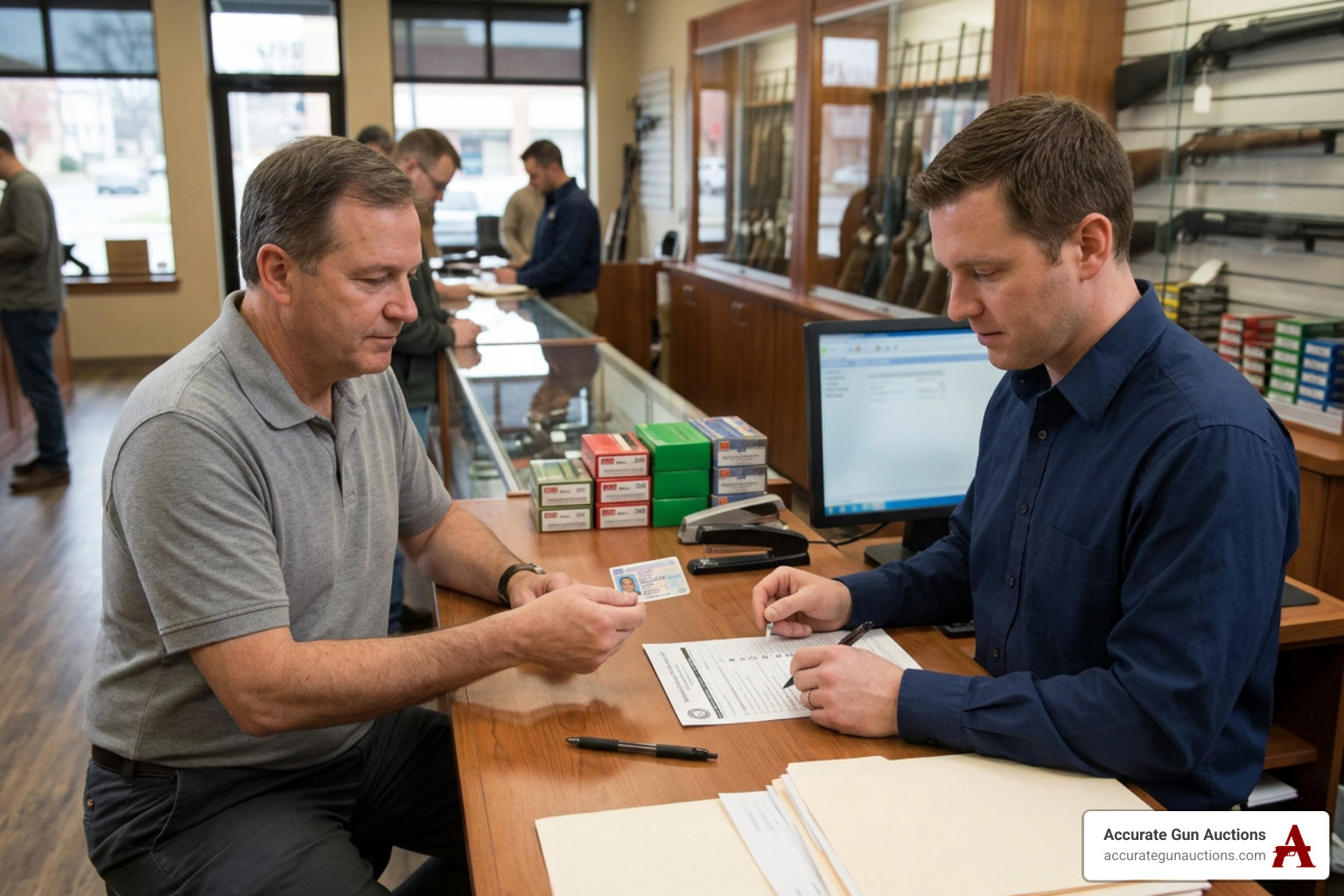
- Demand a Valid Florida Government-Issued Photo ID: Verify their name, age, and residency. A Florida Driver’s License or State ID is perfect. Take a photo or keep a written record of their ID details.
- Look for a Florida Concealed Weapons License (CWL): This is the ultimate “cheat code” for private sellers. To hold a valid Florida CWL, the individual must have passed an extensive background check by the Florida Department of Agriculture and Consumer Services, including fingerprinting. If they have a valid CWL, you can rest incredibly easy knowing they are not a prohibited person.
- Ask Direct Questions: Don’t be shy. Ask them directly: “Are you legally allowed to own a firearm in the state of Florida?” and “Is this firearm for you, or are you buying it for someone else?” (The latter helps you avoid “straw purchases,” where someone buys a gun on behalf of a prohibited person—a severe federal crime).
- Meet in a Safe, Public Location: Never invite a stranger to your home, and never go to theirs. Arrange to meet in the parking lot of a local police station (many have designated “safe exchange” zones), a well-lit public shopping center, or a busy gun show.
- Trust Your Gut: If the buyer acts nervous, refuses to show ID, makes odd comments, or tries to hurry the transaction, walk away. No amount of cash is worth a felony charge or a lifetime of guilt.
For a deeper dive into these safety steps, check out Can I Sell a Gun Privately in Florida? Yes, 2026 Guide.
Documenting the Transfer: The Firearm Bill of Sale

If a gun you once owned is ever found at a crime scene, law enforcement will trace the serial number back to the last known retail purchaser—which might be you. Without documentation showing exactly when, where, and to whom you sold the firearm, you could find yourself in a very uncomfortable police interrogation room trying to explain why a gun registered to you was used in a crime. This is why a Firearm Bill of Sale is your best legal shield. What paperwork is required to sell a gun in Florida? will give you a clear look at how to protect yourself.
Why a Bill of Sale is Recommended for Florida Private Sales
While Florida law does not legally require you to create or file a bill of sale for private gun transfers, we consider it absolutely essential. A robust bill of sale acts as a legal receipt, proving that you transferred ownership of the firearm and are no longer responsible for its use.
A proper Firearm Bill of Sale should include:
- The date and time of the transaction.
- The seller’s full name, address, and signature.
- The buyer’s full name, address, and signature.
- The buyer’s Florida Driver’s License number and/or Concealed Weapons License number.
- A detailed description of the firearm (Make, Model, Caliber, and Serial Number).
- A Signed Declaration: A statement signed by the buyer certifying that they are of legal age, are a resident of Florida, and are not legally prohibited from purchasing or possessing firearms under state or federal law.
By having the buyer sign this declaration, you establish written proof that you did your due diligence and had no reason to believe they were a prohibited person. Learn more about protecting yourself with Selling a Gun Privately in Florida and our guide on how to Legally Sell a Firearm in Florida Private Sale Rules 2026.
How to Verify a Firearm is Not Stolen
As a responsible seller, you also want to ensure that the gun you are selling is completely clear of any legal issues. If you bought the gun privately yourself years ago, you might want to double-check its history.
Fortunately, the Florida Department of Law Enforcement (FDLE) provides a public, online Stolen Gun Search tool. By entering the firearm’s serial number, you can instantly search state databases to confirm whether the gun has been reported stolen. If the search returns “No Records Found,” you are clear to proceed with the sale. If you want to see how this fits into the broader picture of smart gun ownership, Check out our guide on how to sell guns in Florida.
Frequently Asked Questions About Selling Guns in Florida
To help summarize the differences between your options, we’ve compiled a quick comparison of selling your firearm privately versus using a licensed FFL dealer:
| Feature | Private Sale (Between Individuals) | FFL Dealer Transfer / Auction |
|---|---|---|
| Background Check Required? | No | Yes (NICS Check) |
| Waiting Period? | No | Yes (3 days for handguns, unless exempt) |
| Out-of-State Buyers Allowed? | No (Strictly prohibited) | Yes (Shipped to receiving FFL) |
| Paperwork Required? | None by law (Bill of Sale recommended) | ATF Form 4473 and Bound Book logging |
| Liability Exposure | High (Vetting is entirely on you) | Extremely Low (Dealer handles all liability) |
Can I sell a gun to an out-of-state resident privately?
No. Under federal law, you cannot privately sell or transfer a firearm to a resident of another state. If you find a buyer online or at a gun show who lives outside of Florida, the transfer must be routed through a Federal Firearms License (FFL) holder. You will need to ship or bring the firearm to an FFL dealer, who will then ship it to an FFL dealer in the buyer’s home state. The buyer must then complete ATF Form 4473 and pass a background check before they can take possession of the firearm.
What are the penalties for an illegal firearm transfer in Florida?
The penalties for violating state and federal firearm transfer laws are severe. Knowingly selling a firearm to a prohibited person, or conducting an illegal interstate transfer without an FFL, is a federal felony punishable by up to 10 years in federal prison and fines up to $250,000. Additionally, under Florida law, transferring a firearm to a minor without parental consent is a third-degree felony. To learn more about the strict penalties surrounding firearm transactions, Read the Florida statute on mandatory waiting periods.
Do I need a license or permit to sell my personal firearm?
No. If you are simply selling a firearm from your personal collection, you do not need a license or permit in Florida. However, if you buy and sell firearms frequently with the primary goal of making a profit, federal law may classify you as “engaged in the business” of selling firearms, which requires a Federal Firearms License. For occasional sales of personal property, no license is required.
Conclusion
Selling a firearm privately in Florida is a great way to pass along a cherished piece or free up cash, but it does carry significant legal responsibilities and safety risks. Vetting buyers, driving to public parking lots, negotiating with strangers, and drafting bills of sale can quickly become a stressful chore.
At Accurate Gun Auctions, we offer a better way. We are a fully licensed online firearms auction platform that helps gun owners across Florida—including Clearwater, Tampa, Orlando, Miami, Jacksonville, St. Petersburg, Tallahassee, The Villages, Naples, and Fort Lauderdale—sell their firearms to a nationwide buyer base.
Our unique advantage is simple: we handle 100% of the compliance, marketing, and physical transfers for you. You don’t have to worry about vetting buyers, running background checks, or writing up bills of sale. We ensure strict FFL, NFA, and FDLE regulatory compliance, taking all the legal liability off your shoulders while broadcasting your firearms to millions of competitive bidders to secure the maximum possible sale price.
Ready to sell your firearms safely, legally, and stress-free? Get started with Florida private gun sales today and let us handle the hard work!